
Tapo C201 Pan/Tilt Camera
4.5Editor score
360-degree horizontal coverage
Baby crying detection
Local and cloud storage
1080p Full HD video
Explore the best Cloud IP Camera options, comparing 10 models for image quality, night vision, storage, connectivity, outdoor durability, and smart alerts.
Cloud IP cameras combine network-connected video, mobile viewing, and flexible recording options in a single security system. A worthwhile model should deliver clear video, dependable motion alerts, useful night vision, and storage that suits your privacy needs. The right choice also depends on whether it serves an indoor room, a busy entryway, or an exposed outdoor area.
The cameras in this guide were compared using the supplied specifications, focusing on image resolution, viewing range, night-vision capability, detection features, audio functions, storage choices, connectivity, installation requirements, and outdoor durability. The list covers battery-powered and wired models, indoor and outdoor designs, consumer-friendly apps, and professional systems with local-recording flexibility.
Each review explains the standouts, limitations, and most suitable users for one camera. The top selections represent the strongest options for overall value, premium capability, and essential monitoring, while the remaining entries broaden the comparison for different rooms and security needs. Product listings and configurations may change, so readers should verify the latest specifications and compatibility before purchasing.
4.5Editor score

4.6Editor score
This side-by-side overview compares resolution, viewing range, night vision, storage, connectivity, and the most important practical features across ten indoor and outdoor cloud IP cameras.
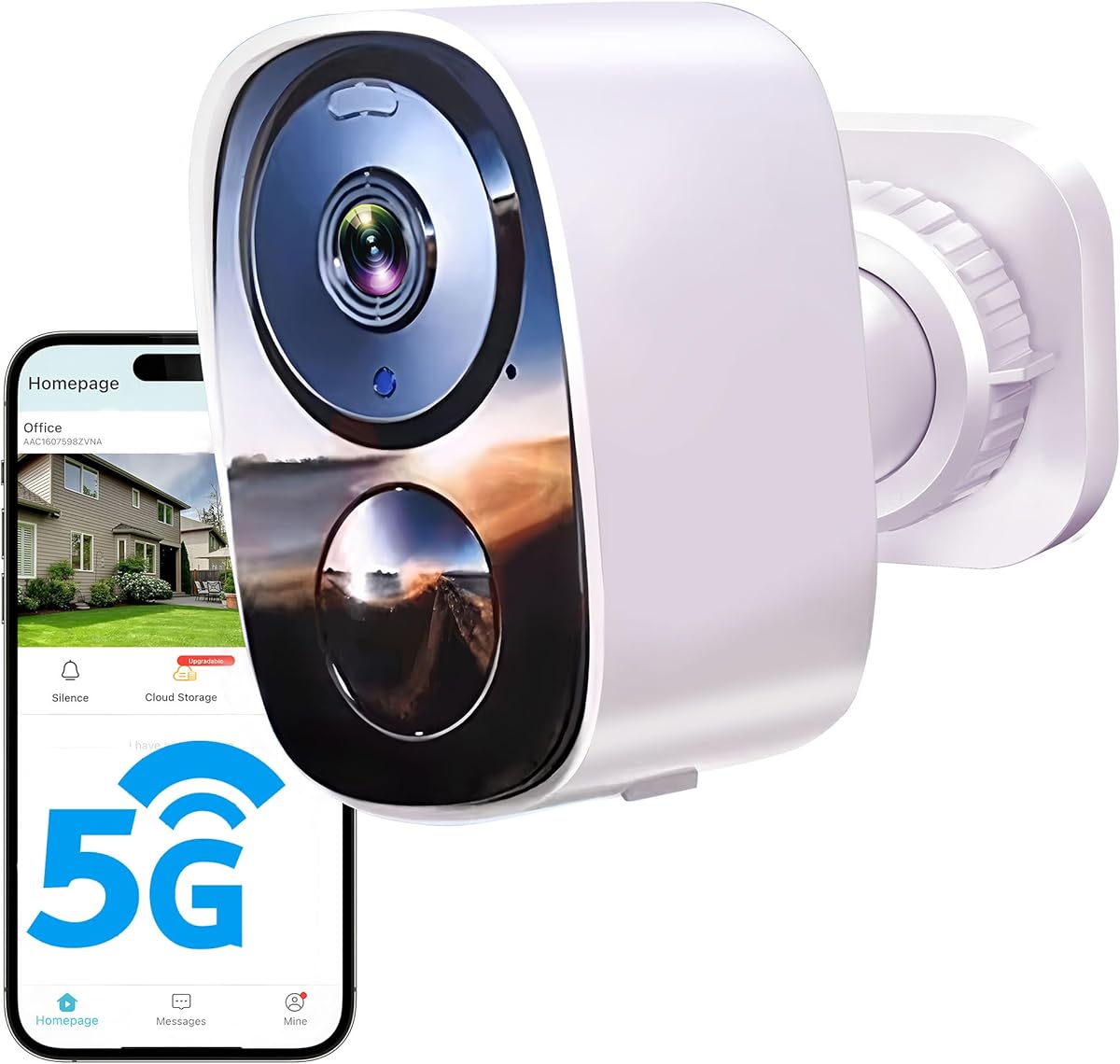




The 2026 Upgraded 2K Security Camera is a versatile wireless outdoor model offering 2K UHD recording, full-color night vision, dual-band Wi-Fi, and a rechargeable battery that can operate for as long as six months under favorable conditions. Its 4.3 rating reflects a generally capable package for users who want outdoor coverage without running power cables to each mounting point.
We may earn a commission when you buy through this link, at no additional cost to you.
Its most useful advantage is installation flexibility. A wireless design makes this camera suitable for driveways, yards, gates, porches, and other locations without nearby outlets. The listed 1-6 month battery estimate is backed by more specific engineering data: approximately 60 days when motion detection triggers 100 times daily, with longer theoretical life at lower activity levels. Built-in lighting supports color footage in darkness, while AI motion detection and instant phone notifications help users focus on relevant events.
There are important trade-offs. The free cloud plan provides SD-quality recordings, while HD cloud footage requires a paid plan. A local microSD card up to 256GB offers another option, although the card is not included. Battery performance also changes with motion frequency, recording mode, and temperature, so the headline range should be treated as a best-case estimate rather than a guarantee for every location.
This is a strong choice for households wanting flexible outdoor placement, two-way communication, and local or cloud viewing without a complex wired installation. Buyers should compare the camera against their router, confirm their preferred recording method, and test the mounting position for Wi-Fi strength. It is less appropriate for anyone requiring uninterrupted 24/7 recording without reliable battery management or those unwilling to use a paid HD cloud plan.
Because the camera operates on a rechargeable battery and communicates over Wi-Fi, it can be repositioned as coverage needs change. This makes it useful for temporary monitoring, rental properties, and areas where outdoor wiring would be inconvenient.
AI motion detection, a spotlight, and a siren alarm work together to expose and potentially deter activity. Full-color night vision can provide more context than conventional infrared footage, although actual nighttime results depend on placement, ambient light, and motion frequency.
We may earn a commission when you buy through this link, at no additional cost to you.
The Tapo C201 Pan/Tilt Security Camera is a compact indoor camera with a 4.5 rating, 1080p Full HD recording, 360-degree horizontal movement, and 114-degree vertical movement. It is especially well suited to nurseries, pet rooms, hallways, and other spaces where one stationary viewpoint may not reveal the entire room.
We may earn a commission when you buy through this link, at no additional cost to you.
Detection features distinguish it from a basic pan-and-tilt model. The camera can send immediate notifications when it detects motion, a person, or a baby crying. Footage can be recorded continuously to a microSD card of up to 512GB, while Tapo Care provides cloud history and features such as motion tracking and baby-crying detection. Integrated infrared illumination supports night vision up to 30 feet, making the camera more useful after bedtime or when pets are active in the dark.
The main limitation is its 2.4GHz-only Wi-Fi connection. Homes with a modern dual-band router may need to ensure the camera receives a strong 2.4GHz signal, particularly if it is placed through several walls. It is also designed for indoor use, so buyers should not treat it as an outdoor camera. The 30-foot nighttime range is also more modest than the long-range night vision offered by the outdoor models in this guide.
The Tapo C201 is a compelling pick for inexpensive, flexible indoor monitoring. It appeals especially to parents, pet owners, and renters who want pan-and-tilt coverage plus intelligent notifications without paying for continuous cloud history. It is less suitable for exterior use or for users who require simultaneous high-bandwidth connectivity on both Wi-Fi bands.
The camera's broad mechanical range makes it easy to monitor a room, hallway, or play area from one position. Rather than relying on a narrow fixed frame, users can redirect the lens toward the area that needs attention.
Person, motion, and baby-crying detection make the C201 more than a basic live-view camera. These targeted notifications are particularly useful when a household wants to know what prompted an event without checking every feed continuously.
We may earn a commission when you buy through this link, at no additional cost to you.
The TP-Link Tapo C500 is a wired outdoor pan-and-tilt camera offering 1080p Full HD video, 360-degree horizontal coverage, and 130-degree vertical coverage. Its 4.5 rating and feature set make it one of the strongest general-purpose options for monitoring exterior spaces where long-range night visibility and flexible camera movement matter.
We may earn a commission when you buy through this link, at no additional cost to you.
AI person detection and motion tracking allow the camera to follow movement and notify users when a person is identified. A physical privacy mode blocks the lens directly through the housing, offering a clear visual indication that the camera is no longer recording. Two-way audio supports push-to-talk communication, and a custom audio alarm can be recorded for deterrence. Its night vision reaches up to 98 feet, giving it a meaningful advantage over typical indoor cameras when covering driveways, yards, or entrances.
The C500 is wired and requires a 2.4GHz network, so installation is less flexible than a battery model. Users should plan for a suitable power outlet and ensure that the selected mounting location has a dependable network connection. Recordings can go to a separately purchased microSD card of up to 512GB, while Tapo Care is required for cloud storage and its additional functions.
This camera is an excellent fit for homeowners who want outdoor pan-and-tilt coverage, intelligent person alerts, and long nighttime visibility without moving to a higher-resolution model. It is particularly useful for monitoring a broad front yard, side entrance, or parking area. Users seeking a simple indoor monitor or a completely wireless installation should consider the Tapo C201 or the battery-powered 2K camera instead.
Night vision of up to 98 feet gives the C500 a wider outdoor operating range than many compact indoor cameras. This makes it better suited to driveways, gates, and larger exterior areas where identifying movement at a distance is important.
The physical privacy mode provides a reassuring mechanical way to stop the lens from viewing a sensitive area. Two-way audio and the customizable alarm add interactive monitoring and deterrence without requiring a separate visible deterrent device.
We may earn a commission when you buy through this link, at no additional cost to you.
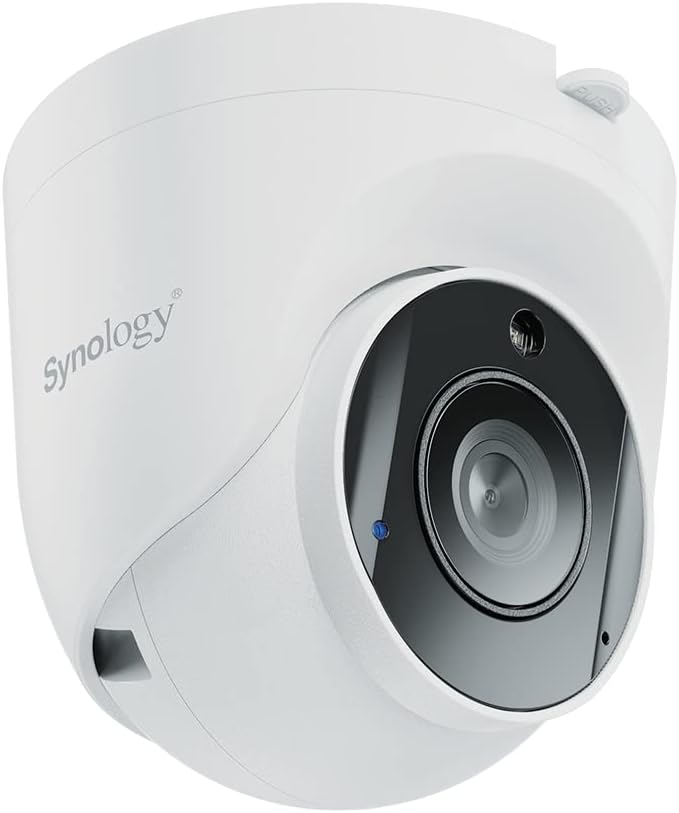
The Synology TC510 is the most specialized camera in this roundup, combining a 5MP sensor, 30-frame-per-second recording, 30-meter night vision, and a rugged outdoor enclosure. It targets users who need more than basic household monitoring, particularly those who value edge analytics, network resilience, compliance-oriented deployment, and continuity during internet interruptions.
We may earn a commission when you buy through this link, at no additional cost to you.
Edge AI detection allows people and vehicle analytics to be processed close to the camera. Peer-to-peer connectivity lets users access live footage even if the internet connection drops, an important advantage for critical monitoring. The camera can also fail over to microSD recording after a network failure, reducing the chance that an outage leaves a gap in captured evidence. US NDAA and TAA compliance make it relevant to sensitive commercial and institutional environments.
Its strengths come with greater complexity. This is not positioned as a simple plug-in consumer camera, and users should plan network infrastructure, recording destinations, and firmware management carefully. No customer rating was supplied for this model, so the established Synology TC510 platform and its professional feature set are more useful guides than any rating-based comparison. The supplied data also does not detail the exact regional storage service and account terms.
The TC510 is best for organizations or technically experienced users who need resilient recording and on-site intelligence. It is less suitable for someone seeking a simple indoor monitor, effortless battery placement, or a broad consumer-app experience. For those priorities, the Tapo, Kasa, and Reolink models in the guide provide simpler paths at the expense of some specialized enterprise features.
Peer-to-peer access and microSD failover recording help preserve visibility when external connectivity is interrupted. That combination is particularly valuable for security installations where an internet outage should not automatically end local evidence capture.
IP67, IP66, and IK10 protection indicate attention to environmental sealing and impact resistance. Combined with edge-based people and vehicle analytics, the TC510 is well suited to demanding exterior or operational environments.
We may earn a commission when you buy through this link, at no additional cost to you.
The 3MP Security Camera Outdoor Wired is a pan-and-tilt model built around automatic tracking, dual-band Wi-Fi, and color night vision. Its 4.2 rating and broad 355-degree pan and 108-degree tilt ranges make it a practical choice for users who want one exterior camera to cover a broad yard, driveway, or perimeter.
We may earn a commission when you buy through this link, at no additional cost to you.
Horizontal auto tracking is designed to follow moving objects, while a PIR sensor detects people, pets, cars, and packages. When activity occurs, the camera sends an alert and a six-second event clip. Its LED white light and infrared illumination can activate at night to provide a color view of detected movement. Device sharing also lets family members access the camera through the app, simplifying multi-user monitoring.
Although the title emphasizes wired operation, the listed features also mention 2.4GHz and 5GHz Wi-Fi connectivity, and the camera offers both local and cloud storage. The supplied information is less detailed about the exact wiring configuration, included accessories, and maximum storage capacity than it is for several competing models. Buyers should therefore verify power requirements and app compatibility before installation. It also lacks a published cloud plan structure, making the free versus paid feature boundary less explicit.
This camera is a good fit for users who value automatic motion tracking and flexible wireless connectivity more than a recognized brand ecosystem or highly detailed documentation. It suits front yards, entrances, and parking areas where one moving lens can cover several directions. Those needing extensive NVR integration, long-range night vision, or a clearly documented storage capacity should examine a more fully specified alternative.
A 355-degree horizontal range gives the camera broad mechanical coverage, and automatic tracking helps it follow activity rather than relying on a fixed direction. This is particularly helpful in open areas where people or vehicles may enter from different sides.
The six-second clip accompanying a motion alert can make it easier to understand what happened. Combined with color illumination and support for several common detection targets, it offers more useful event context than a bare motion notification.
We may earn a commission when you buy through this link, at no additional cost to you.
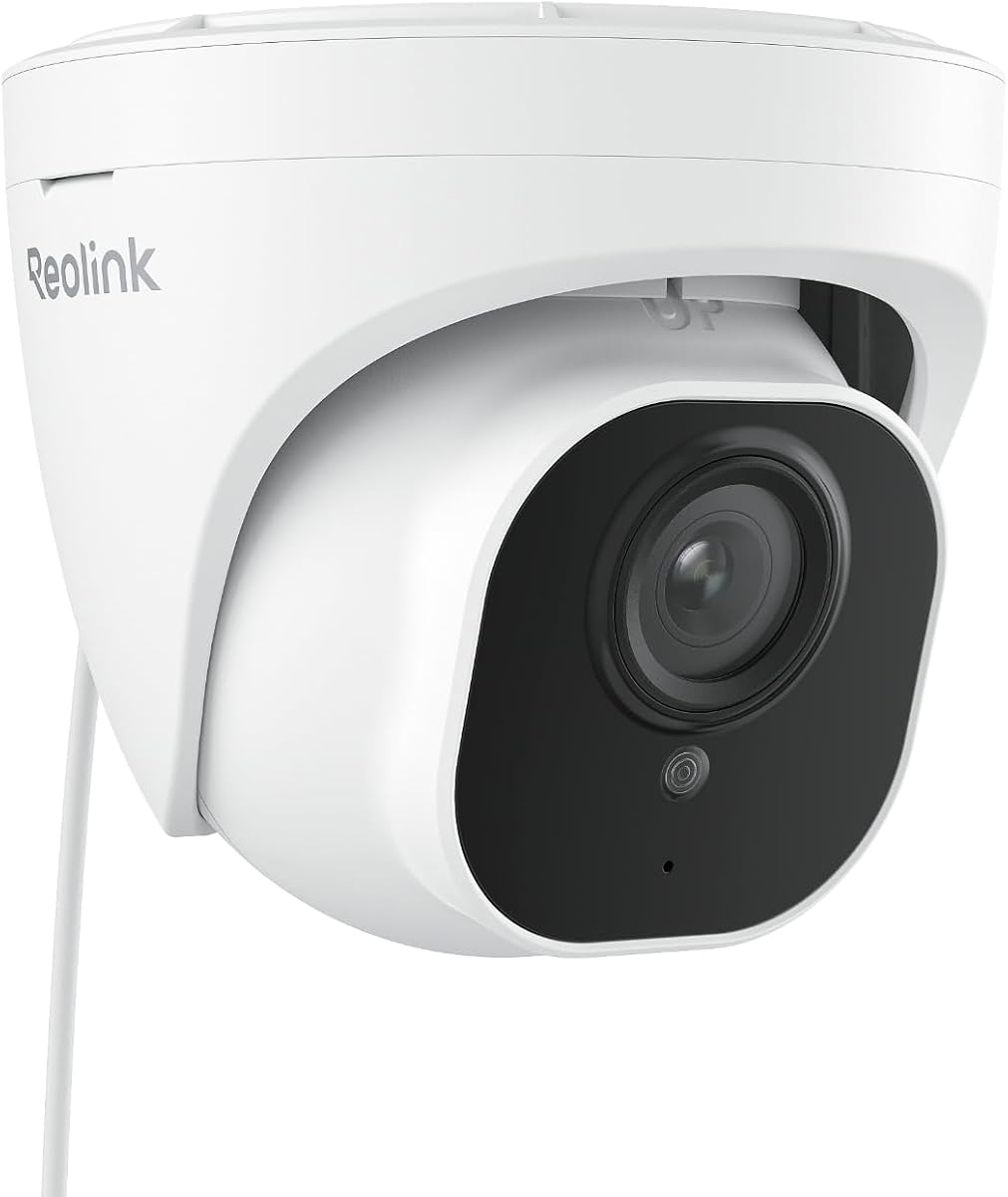
The Reolink RLC-820A is a 4K Ultra HD outdoor dome camera designed for users who want detailed footage and a dependable wired connection. Its 4.4 rating reflects a strong balance of image quality, on-device detection, PoE installation, and multiple recording options, making it one of the most attractive choices for a structured home or small-business surveillance system.
We may earn a commission when you buy through this link, at no additional cost to you.
The camera uses on-device detection to distinguish people and vehicles from other moving objects, which can reduce irrelevant alerts without requiring every analytical operation to occur remotely. Power over Ethernet carries both power and video through a single network cable, producing a more reliable connection than battery-powered Wi-Fi cameras and simplifying large installations. Recordings can run continuously, during detected motion, or on a schedule.
The main drawback is installation complexity. Users need a wired network path, a suitable PoE switch or injector, and a secure way to route the cable. A microSD card of up to 256GB can serve as a local destination, while Reolink NVR and FTP server options provide additional flexibility. The card itself is not included, and the camera's robust feature set may demand more planning than a simple indoor plug-in model.
The RLC-820A is ideal for users who prioritize fine detail, stable wired connectivity, and flexible local control. It is an especially compelling choice for monitoring entrances, driveways, retail areas, or other locations where identifying faces, vehicles, or other detail matters. Buyers seeking a battery model, indoor pan-and-tilt design, or turnkey consumer setup should choose one of the more compact alternatives.
The 4K sensor provides substantially more detail than 1080p footage, which is useful when a person, vehicle, package, or doorway appears small in a wide outdoor scene. Audio recording adds further context to the visual evidence.
Sending power and data over one Ethernet cable removes the need for a nearby outlet and reduces Wi-Fi instability. That makes the camera practical for fixed exterior positions and installations that expand beyond a single room.
We may earn a commission when you buy through this link, at no additional cost to you.
The Kasa EC71 is a feature-rich indoor pan-and-tilt camera with a 4.4 rating. It combines 1080p Full HD video, 360-degree horizontal coverage, 113-degree vertical movement, automatic motion tracking, and a Patrol Mode that visits selected areas at chosen intervals. These characteristics make it a flexible option for busy rooms, hallways, and pet spaces.
We may earn a commission when you buy through this link, at no additional cost to you.
Its detection engine sends notifications for motion and people, with optional baby-crying detection for nursery monitoring. Two-way audio allows owners to speak to pets remotely, while night vision extends visibility to 30 feet in a dark room. Footage can be stored continuously on a microSD card of up to 256GB or placed in Kasa Care cloud storage, where the supplied information lists 30-day history, Video Summary, and activity notifications with snapshots as benefits.
Like many inexpensive indoor cameras, the EC71 connects only to a 2.4GHz Wi-Fi band. It is not specified for outdoor exposure, and its 30-foot night-vision range is less capable than the Tapo C500 or Reolink RLC-820A for exterior spaces. Cloud history depends on a subscription, although local recording offers a useful way to reduce ongoing cloud reliance. Support for Amazon Alexa and Google Home adds convenience for viewing live footage on compatible displays.
The EC71 is well suited to families seeking a single indoor camera that can follow activity instead of merely showing one static scene. It stands out for combining tracking, patrol behavior, baby crying detection, and pet communication in an approachable package. It is less appropriate for exterior installations, high-detail evidence gathering, or users whose network supports only the 5GHz band.
Automatic tracking follows moving subjects, while Patrol Mode periodically checks regions selected by the user. Together, these modes make the camera useful in both active and intermittently occupied spaces.
Baby-crying alerts, person and motion detection, and two-way pet communication cover several common household monitoring needs. The result is a camera that can function as a nursery check, pet monitor, or general room camera.
We may earn a commission when you buy through this link, at no additional cost to you.
The Amcrest IP4M-1041B is a 4MP indoor Wi-Fi camera with a 4.0 rating, remote pan and tilt, two-way audio, and a wide 90-degree field of view. It stands out for its compatibility with a broad selection of recording platforms, including PC software, NVRs, Synology and QNAP NAS systems, FTP, and browser-based access.
We may earn a commission when you buy through this link, at no additional cost to you.
Its 4MP sensor records at 30 frames per second and uses H.265 compression to reduce file size and bandwidth consumption. Low-light capability comes from a progressive 1/3-inch CMOS sensor, while built-in infrared LEDs provide night vision up to 32 feet. Users can receive motion notifications, review footage, and communicate through a smartphone. The supplied data notes that digital zoom is limited to the Amcrest View Pro App because of hardware constraints.
A major strength is the ability to preserve footage in a location and format that suits an existing system. The camera supports microSD storage up to 256GB, NVRs, FTP, and NAS platforms, reducing dependence on a single cloud service. Optional Amcrest Cloud, hosted through AWS, offers off-site recording for users who want a backup. However, the camera is restricted to 2.4GHz Wi-Fi, and cloud video is an optional paid service rather than an included standard feature.
The IP4M-1041B is a strong choice for users who already rely on professional-style recording tools or need footage accessible through multiple platforms. It is less ideal for a simple mobile-only household or anyone whose router offers only 5GHz connectivity. Compared with the Tapo and Kasa indoor cameras, it offers higher resolution and greater integration potential but requires more attention to storage configuration.
Support for microSD, NVR, FTP, and NAS systems gives users several ways to retain and retrieve footage. This flexibility is valuable for anyone who wants to avoid tying the entire camera system to a single proprietary cloud workflow.
H.265 encoding helps manage storage and network requirements while preserving the detail of a 4MP image. A 90-degree field of view also gives the camera broad coverage for indoor rooms without requiring a fisheye perspective.
We may earn a commission when you buy through this link, at no additional cost to you.
The Hiseeu 5MP Security Camera is the highest-rated product in the supplied group, carrying a 4.6 rating. It combines 2560 by 1920 video, a 3.6mm fixed lens with a 78-degree field of view, three infrared illuminators, a bright floodlight, and flexible full-color night modes in an outdoor-oriented design.
We may earn a commission when you buy through this link, at no additional cost to you.
Its night-vision controls are particularly versatile. The camera can operate with infrared, full-color, or automatic smart night vision, while its floodlight can illuminate very dark environments. Digital zoom up to 4X provides a closer view when necessary. A built-in microphone and speaker support two-way communication, and a deterrent alarm can be used against unwelcome visitors. These features make it suitable for entrances, yards, driveways, and other exterior monitoring points.
The camera can work independently through the EseeCloud app or integrate with a compatible 16-channel Hiseeu wireless camera system. It operates on 2.4GHz Wi-Fi and accepts a DC12V power adapter, so it is not a completely battery-independent unit. Users adding the camera to an existing Hiseeu system should follow the stated reset and IP-address process. Recording legality also varies by state, which matters if footage may be used in a legal dispute.
The Hiseeu 5MP is an excellent all-around choice for users who want more outdoor detail than 1080p provides without moving to a complex professional camera. Its combination of floodlighting, selectable night modes, two-way audio, and NVR compatibility gives it unusual flexibility. It is a particularly good fit for households willing to use 2.4GHz Wi-Fi and a wired power connection.
Users can select infrared, full-color, or automatic night vision according to the scene. The bright floodlight adds an additional way to capture visible detail in otherwise dark areas.
The EseeCloud app supports independent remote viewing, while compatibility with Hiseeu 16-channel systems offers a path to larger installations. This makes the camera relevant to both single-camera users and households building a broader surveillance network.
We may earn a commission when you buy through this link, at no additional cost to you.
The EVERSECU 1080P PTZ 4-Pack is a multi-camera outdoor bundle with a 3.9 rating. It is designed for users who want to cover several areas at once, offering four pan-and-tilt cameras, 3MP images, dual-band Wi-Fi, auto tracking, spotlight night vision, two-way audio, and compatibility with standard NVR workflows.
We may earn a commission when you buy through this link, at no additional cost to you.
Each camera has a 320-degree horizontal range and a 90-degree vertical range. It can connect to both 2.4GHz and 5GHz networks, reducing the chance that users will have to change router settings for each unit. A free mobile app and PC CMS software provide live viewing and playback, while access sharing lets family members view multiple feeds from their phones. Amazon Alexa can display the live feed on compatible devices.
The four-camera format introduces more setup and network planning than a single-camera purchase. ONVIF compliance and RTSP support are valuable for integration with VLC, third-party tools, and many NVR systems, but the ONVIF feature must be enabled in the O-KAM app and requires the device to be assigned a password. Local microSD storage is available, while the cloud option includes a three-day free trial rather than a clearly permanent free tier.
This bundle is attractive for buyers who need several exterior viewpoints and value open integration standards more than a refined single-camera app. It may be less suitable for a small apartment, a simple user who wants minimal configuration, or anyone who expects a longer cloud trial. The included power adapters and four-camera approach also require careful placement to avoid redundant coverage.
The four-pack can cover separate entrances, outdoor walkways, parking areas, or property boundaries without requiring four separate product searches. Auto tracking and pan-and-tilt movement help each unit cover a broad area.
ONVIF conformance and RTSP streaming make the cameras more attractive to users who already operate NVR software or other video tools. Password-protected ONVIF access and encryption add useful security controls once configuration is complete.
We may earn a commission when you buy through this link, at no additional cost to you.
The right cloud IP camera depends on the location, recording method, network, and level of detail you need. Reviewing these factors before buying can prevent common problems involving night visibility, storage access, wireless coverage, and weather exposure.
Start with whether the camera will sit inside or outside. Indoor models such as the Tapo C201 and Kasa EC71 are optimized for rooms, nurseries, pets, and hallways, while outdoor models include weather-resistant housings, stronger night illumination, and wider exterior coverage. An outdoor camera should have a stated weather-resistance rating and be positioned where water cannot collect around its mount. A long-range indoor lens does not make an indoor model suitable for exposed exterior use.
Resolution determines how much fine detail the sensor can preserve, but the lens and mounting distance are equally important. The 5MP Hiseeu and 4MP Reolink or Amcrest models provide more pixel detail than 1080p cameras, while the TP-Link Tapo models balance resolution with consumer-friendly operation. A wide field of view covers more ground but reduces the number of pixels on a distant subject. Pan, tilt, zoom, and auto tracking can compensate when one fixed frame is not enough.
Night capabilities range from basic infrared illumination to long-range infrared combined with floodlights and full-color recording. Indoor cameras commonly cover around 30 feet, while the Tapo C500 reaches up to 98 feet and the Synology TC510 offers 30-meter night vision. Color modes can reveal clothing, vehicle, or environmental detail more clearly, although they may depend on nearby light or activating a bright floodlight. Consider both the stated range and the typical lighting of the monitored area.
Local and cloud recording serve different purposes. Local microSD storage keeps routine footage close to the camera and can reduce dependence on a subscription, while cloud access is helpful for remote viewing, event sharing, and off-site backup. Maximum card capacities vary widely, from 256GB on several models to 512GB on the Tapo cameras. Check whether the free cloud tier stores SD-quality or HD footage, how long history is retained, and what features disappear when a local card is used instead.
A 2.4GHz-only camera is compatible with most routers but should be checked for signal strength through walls. Dual-band models can connect to 2.4GHz or 5GHz, offering more placement flexibility and potentially faster performance on 5GHz. Wired Power over Ethernet provides the most consistent network path, although it requires cable routing and compatible network equipment. Signal quality, router congestion, and the distance to the access point are more important than a small difference in advertised wireless speed.
AI detection can distinguish people, vehicles, pets, packages, or baby crying from general motion. Such filters can make alerts more useful, but accuracy depends on the camera model, detection area, lighting, and how often objects enter the scene. Auto tracking and customizable alarms add further value for exterior cameras. A camera that produces too many false alerts may be ignored, so users should configure sensitivity and notification rules after installation.
A cloud camera transmits footage beyond the home, making account protection, network security, and storage access important. Look for features such as password-protected ONVIF access, encrypted wireless connections, private app accounts, and the ability to block the lens physically. The Tapo C500 includes a physical privacy mode, while several models support local recording for users who want more control over retention. Firmware updates and strong account credentials should be part of normal ownership.
Battery cameras offer the easiest placement, while wired models suit fixed locations with reliable power and network access. PoE reduces cable requirements but still needs an Ethernet route. Plug-in PTZ cameras are straightforward when outlets are available, whereas NVR bundles and four-camera kits require more careful network design. Consider the app ecosystem, voice-assistant compatibility, NVR support, and available customer support as well as the camera's headline specifications.
Begin by choosing the camera based on the area it must cover, then position it high enough to avoid easy tampering without creating an extreme viewing angle. Outdoor cameras should be mounted under shelter where possible, while indoor units benefit from a shelf, wall, or corner that shows the main entry and activity zones. Before permanent installation, confirm that the selected location receives adequate Wi-Fi, power, or Ethernet connectivity.
Set up the camera through its specified app, create a protected account, update the firmware, and connect it to the correct network band. For dual-band models, connect to 2.4GHz first if that is the more stable option. Adjust motion zones, detection sensitivity, notification schedules, recording mode, image orientation, and night-vision preferences. MicroSD cards should be formatted through the app and checked for device compatibility before footage is expected to appear.
Test the system by walking through the monitored area, triggering motion, speaking through two-way audio, and reviewing the resulting live view and recorded clips. Clean the lens periodically, keep the housing dry, and check that brackets remain tight. Update the app and camera firmware as released, use strong account credentials, and review local or cloud storage retention periodically so recordings remain available when needed.
A local-storage camera records primarily to a microSD card inside the camera, while a cloud-storage camera sends recordings to an online service. Local storage can provide continuous access without an ongoing subscription and keeps ordinary recordings on-site. Cloud storage is useful for off-site backup, remote event review, and shared access, but history limits and premium features depend on the provider and plan.
Most cloud cameras need internet access for initial setup, live remote viewing, notifications, and cloud uploads. Some models can continue recording locally, but users may not receive mobile alerts or access live footage remotely. The Synology TC510 is notable for peer-to-peer live access and microSD failover recording when the broader internet connection drops.
2.4GHz generally offers better range and wall penetration, making it a reliable default for many cameras. 5GHz provides more bandwidth and can reduce congestion, but its shorter range may be less suitable for distant cameras. The Hiseeu model, Tapo C500, Amcrest IP4M-1041B, and Kasa EC71 require 2.4GHz, while dual-band models can offer more placement flexibility.
It can, provided the room's dimensions, wall layout, and lens range allow it. The Tapo C201 and Kasa EC71 offer 360-degree horizontal movement, while vertical ranges of 114 and 113 degrees cover floors and ceilings to varying degrees. Physical obstructions, furniture, and reflections can still create blind spots that a wider lens or second camera might resolve.
Several models can provide color nighttime footage. The 2026 Upgraded 2K Security Camera uses full-color night vision with built-in LEDs, the Hiseeu 5MP offers selectable floodlight, infrared, and automatic color modes, and the 3MP Outdoor PTZ Camera activates white and infrared illumination when it detects motion. Color results depend on ambient light, sensor behavior, and the camera's night-vision setting.
ONVIF is important when the camera must work with an NVR or third-party video platform. It provides a common way to discover and stream cameras rather than relying on one proprietary application. The EVERSECU four-pack supports ONVIF and RTSP, but the feature must be enabled in its app and protected with a password. Buyers should also confirm that their existing NVR supports the camera's connection method and protocol.
Support varies by model. The Tapo C201 and Tapo C500 accept cards up to 512GB, while the Kasa EC71, Reolink RLC-820A, and Amcrest IP4M-1041B support up to 256GB. The 2026 Upgraded 2K Security Camera also supports up to 256GB. Cards are generally sold separately, and compatibility should be checked before purchase.
Many models in this guide support voice-assisted live viewing on compatible displays. The Tapo C500 works with Amazon Alexa and Google Assistant, the Kasa EC71 supports Alexa and Google Home, and the EVERSECU four-pack works with Alexa. The 2026 Upgraded 2K Security Camera also states Alexa compatibility. Voice control generally displays the live feed but does not necessarily support every recording or advanced setting.
The Hiseeu 5MP Security Camera is the strongest overall choice for outdoor versatility, combining detailed 5MP footage, selectable night modes, a floodlight, two-way audio, and support for both app-based and NVR-based use. The Tapo C201 is the most approachable indoor pick, while the Tapo C500 stands out for wide exterior coverage and long-range night vision. For professional-grade resilience, the Synology TC510 leads the group with edge analytics, peer-to-peer access, and network-failure recording.
Prioritize the features your location actually needs rather than choosing solely by resolution. A busy nursery may benefit most from baby crying detection and two-way audio, whereas a driveway may require a floodlight, auto tracking, and weather resistance. Wired PoE is worth considering where reliable connections matter, and a local storage option can reduce reliance on a cloud subscription while preserving flexible recording.
Before ordering, verify the latest product details, storage requirements, app compatibility, network band, and weather rating. Listings and included features can change, and NVR cards, cloud services, and accessories may be separate from the camera. Taking a few minutes to confirm compatibility helps ensure that the selected cloud IP camera works smoothly in the place and system where it will be used.
