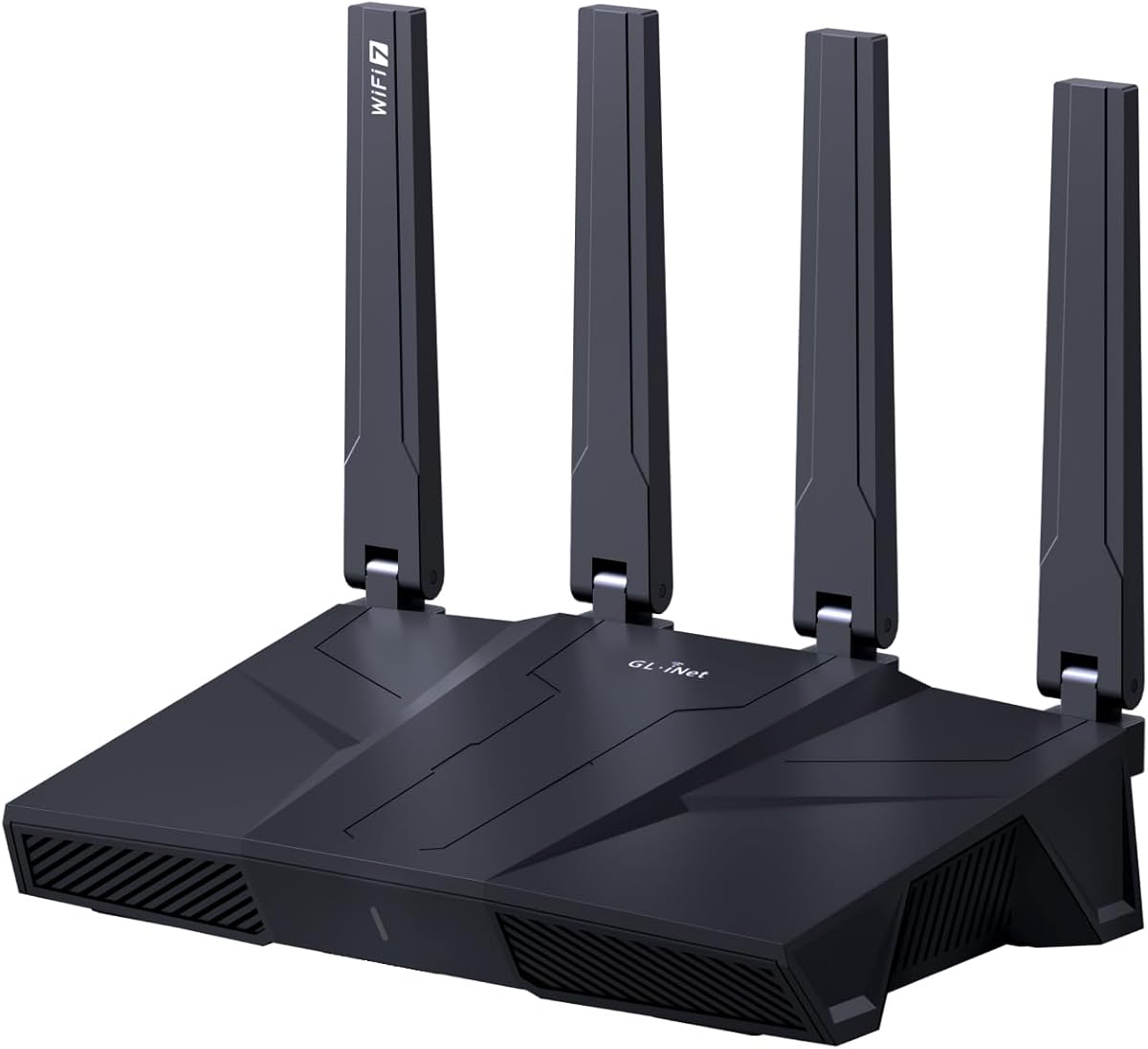
GL.iNet GL-BE9300 Flint 3
4.3Editor score
Tri-band Wi-Fi 7
Five 2.5G Ethernet
Nine Gbps wireless speed
Explore the best router with VPN built, comparing Wi-Fi speed, VPN protocols, coverage, ports, security, portability, and ease of use.
A router with VPN built can protect an entire home or travel network without installing separate VPN software on every connected device. The best models combine useful throughput, strong wireless performance, dependable security, and straightforward administration. Important distinctions include VPN client and server support, protocol choice, hardware capacity, wired ports, and whether the design suits a home, office, or suitcase.
The products in this guide were compared using the supplied specifications, focusing on Wi-Fi generation, advertised VPN performance, connection capacity, coverage, multi-gigabit networking, OpenWrt availability, parental tools, and setup convenience. The list covers premium desktop routers, affordable home models, compact travel units, and a wired business VPN router so different household and travel needs are represented.
Each review explains the standout benefits, practical limitations, and best-fit buyer, while the comparison table provides a quick reference. The top selections range from a flexible budget-friendly business router to advanced Wi-Fi 7 models and a polished travel option. Product listings and prices change frequently, so readers should verify current specifications, subscription requirements, and availability before purchasing.
4.3Editor score

4.5Editor score

4.4Editor score
This side-by-side comparison highlights the main differences in wireless standard, VPN capability, port selection, and intended use, helping readers identify the most appropriate router for home, gaming, travel, or small-office networking.




The GL.iNet GL-MT6000 Flint 2 combines desktop-class Wi-Fi 6 performance with built-in OpenVPN and WireGuard support, making it a strong all-purpose choice for a router with VPN built. Its 4.5 rating reflects a capable balance of speed, flexible networking, and useful home features. Two 2.5-gigabit Ethernet ports also make it more future-conscious than many similarly positioned dual-band routers.
We may earn a commission when you buy through this link, at no additional cost to you.
The router supports Wi-Fi 6 speeds up to 6 Gbps through eight-stream wireless technology, while 1 GB of DDR4 memory and 8 GB of eMMC storage provide room for demanding configurations and additional plugins. Advertised VPN throughput reaches up to 900 Mbps with WireGuard and 880 Mbps with OpenVPN, though actual results depend on the internet service, VPN server, provider, and network environment.
Its strongest appeal is flexibility. The device can serve as a VPN client to protect connected equipment and supports common remote-access needs, while AdGuard Home provides DNS-level filtering and ad blocking. It is designed to accommodate more than 100 devices, making it appropriate for busy homes, shared workspaces, and users who want more control than a simplified consumer interface offers.
The main drawback is that new owners must update the firmware during initial setup, as directed by the manufacturer. The learning curve can also be greater than that of a basic router, particularly for first-time administrators. Even so, buyers seeking strong VPN performance, fast wired connections, and extensive customization will find the Flint 2 unusually well balanced and recommend it as the overall leader.
By running OpenVPN or WireGuard at the router level, connected phones, computers, televisions, and smart-home products can route traffic through a secure VPN tunnel without separate applications. The advertised throughput makes this model suitable for households that need meaningful VPN speed rather than merely checking a basic connection box.
The 1 GB memory, 8 GB storage, and plugin-friendly platform give the router room to grow. That makes it a better fit than minimal routers for users who expect to add DNS tools, network services, or other OpenWrt-based functionality later.
We may earn a commission when you buy through this link, at no additional cost to you.
The TP-Link AXE5400, also identified as the Archer AXE75 in the supplied specifications, is a tri-band Wi-Fi 6E router with a practical mix of performance, security, and home-network features. Its 4.3 rating makes it a compelling option for households that want the less crowded 6 GHz band and built-in VPN support without moving into the most advanced desktop-router category.
We may earn a commission when you buy through this link, at no additional cost to you.
Wireless speeds reach up to 5400 Mbps across three bands: 2402 Mbps on 6 GHz, 2402 Mbps on 5 GHz, and 574 Mbps on 2.4 GHz. OFDMA improves simultaneous transmission to multiple clients, while a 1.0 GHz dual-core processor and 512 MB of memory support the router's broader feature set. The design also emphasizes improved heat dissipation for sustained operation.
VPN functionality is unusually flexible for this class. It supports OpenVPN, PPTP, and L2TP in both server and client roles, allowing connected devices to access remote VPN servers and providing a way to reach a home network from elsewhere. TP-Link HomeShield adds network scans, IoT device identification, parental controls, quality-of-service tools, and periodic usage reports, with a set of features available at no charge.
The primary limitation is that its value depends on having enough compatible devices to benefit from 6 GHz. Buyers should also note that a traditional Gigabit Ethernet interface is less future-proof than the multi-gigabit options found in several competing models. Nevertheless, the AXE5400 is easy to recommend for medium and large homes that value tri-band wireless, recognized management features, and versatile VPN modes.
The dedicated 6 GHz band can offer more available bandwidth and lower interference than the crowded 2.4 and 5 GHz bands. Its benefit is greatest in homes with several Wi-Fi 6E-capable phones, laptops, tablets, or other compatible clients.
EasyMesh compatibility allows additional compatible routers, extenders, or wireless powerline adapters to join the network. This is a useful option for reducing dead zones without committing to a single proprietary mesh system.
We may earn a commission when you buy through this link, at no additional cost to you.
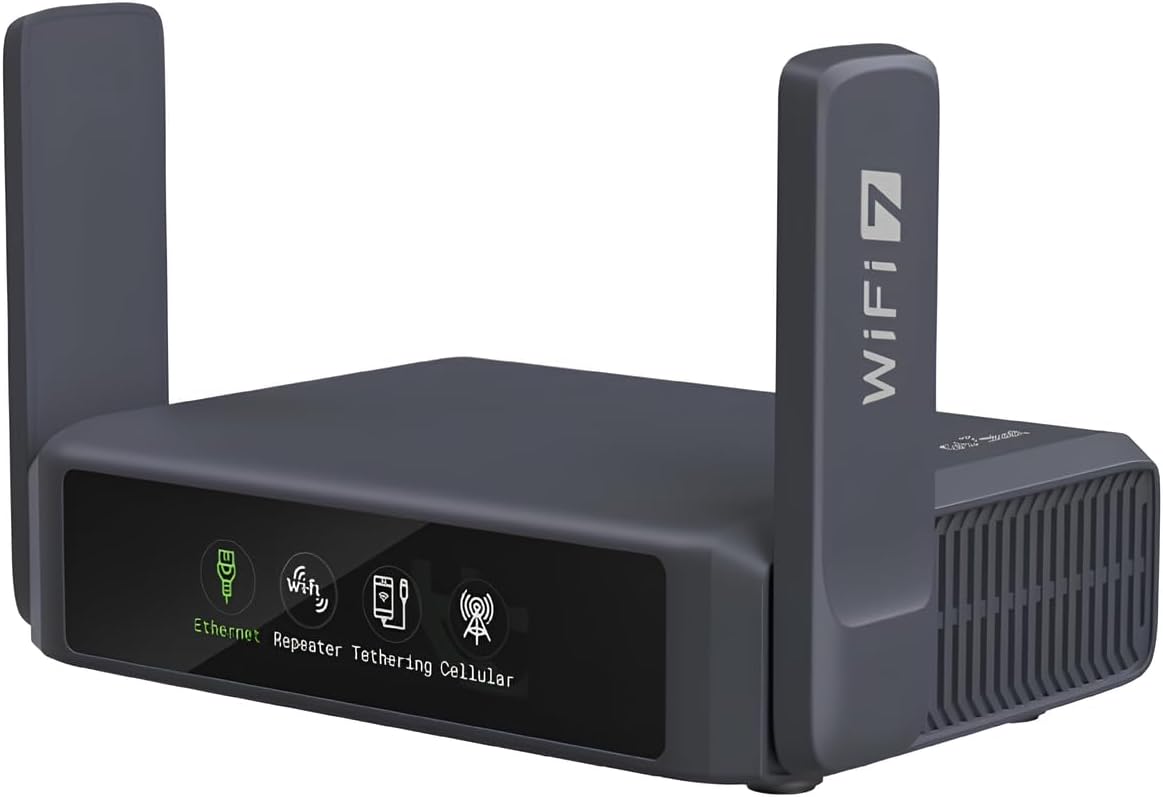
The GL.iNet GL-BE3600 Slate 7 stands apart as a travel-focused Wi-Fi 7 router with a built-in touchscreen, modern Ethernet, and a strong VPN feature set. Its 4.4 rating reflects an unusually polished combination of portability and flexibility. It is especially appealing to travelers who want to create a private, encrypted network in a hotel, cruise cabin, or temporary workspace.
We may earn a commission when you buy through this link, at no additional cost to you.
Its touchscreen provides quick access to Wi-Fi QR codes, real-time speed information, VPN toggles, provider selection, and color-coded indicators for Ethernet, tethering, repeater, and cellular modes. The hardware includes one 2.5-gigabit WAN port, one 2.5-gigabit LAN port, and a USB 3.0 port. Dual-band Wi-Fi 7 provides up to 688 Mbps on 2.4 GHz and 2882 Mbps on 5 GHz.
OpenVPN and WireGuard are pre-installed and compatible with more than 30 VPN services, although an active subscription is needed for a supported provider. Advertised maximum VPN speeds are 100 Mbps for OpenVPN and 540 Mbps for WireGuard under local-network test conditions. The router can also host a VPN server and client simultaneously, allowing remote access to local resources while using a VPN for public internet traffic.
Its compact size and OpenWrt 23.05 foundation make it more sophisticated than the tiny hotspots commonly offered for travel. The dual-band design, rather than tri-band, and the need for a provider subscription are the main compromises. For travelers who value convenience, local control, and simultaneous client-server VPN use, the Slate 7 is one of the most compelling choices in this guide.
The display reduces the need to open a phone, laptop, or admin panel for routine changes. Scanning a QR code, checking a connection status, or switching a VPN on and off is particularly convenient when connectivity needs change frequently during a trip.
Connecting a phone or laptop to the Slate 7 allows traffic to be handled centrally by the router's VPN client. This is more consistent than installing and configuring separate VPN applications on every temporary device.
We may earn a commission when you buy through this link, at no additional cost to you.
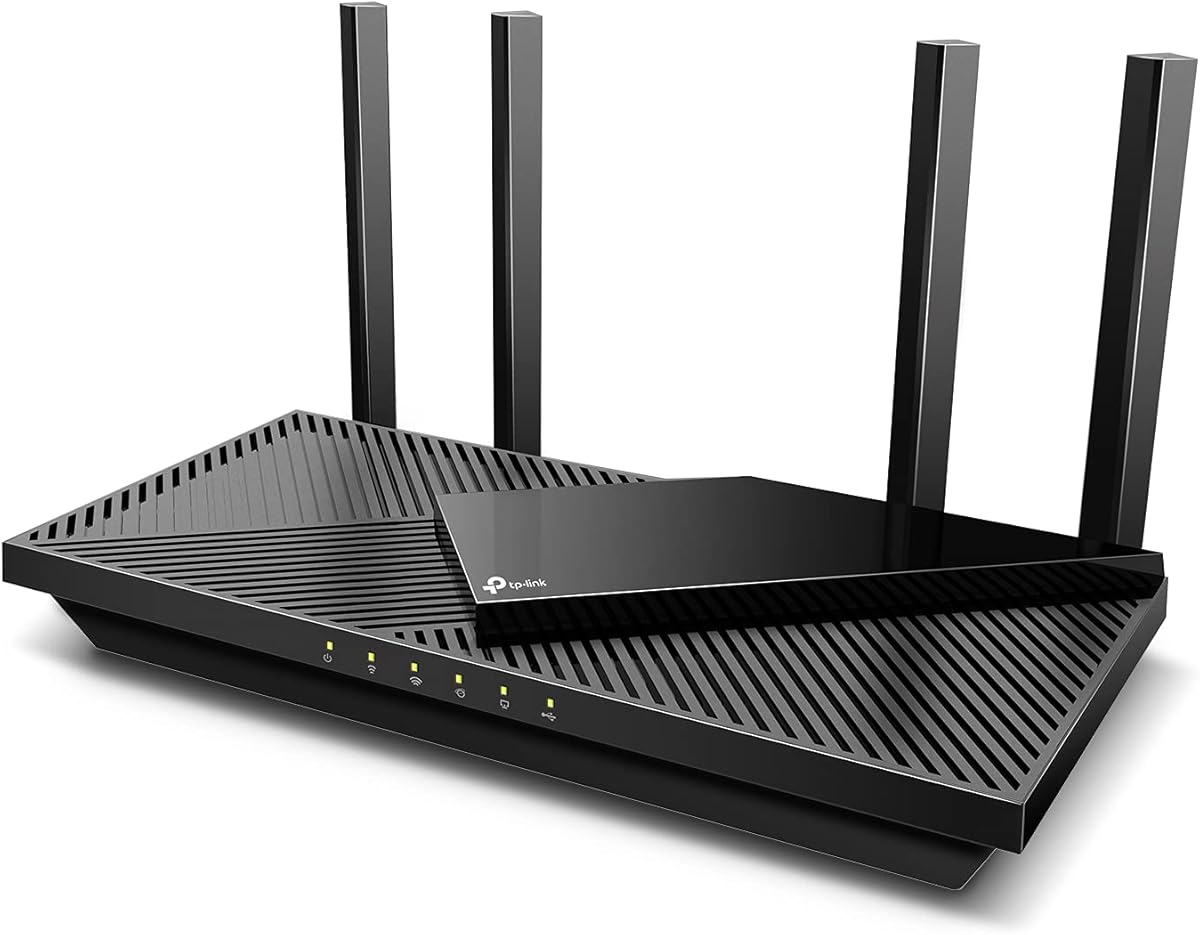
The TP-Link AX3000 is a conventional dual-band Wi-Fi 6 home router with useful built-in VPN functions and an approachable feature set. Its 4.4 rating indicates a dependable general-purpose option for consumers who want better wireless performance and network-level VPN support without moving to a specialized OpenWrt system.
We may earn a commission when you buy through this link, at no additional cost to you.
The router provides up to 2402 Mbps on the 5 GHz band and 574 Mbps on 2.4 GHz. OFDMA lets multiple clients share a band more efficiently, reducing congestion when several devices are active. Four high-gain external antennas and beamforming support broader, more directed coverage, while Target Wake Time helps connected devices communicate more efficiently and conserve power.
Both VPN server and client roles are supported, making this model useful for protecting connected devices or reaching a home network from outside. The free HomeShield tools include a security scan, IoT device identification, basic parental controls, quality of service, and weekly or monthly reports. Alexa compatibility provides another convenient way to manage the router.
It does not offer tri-band or Wi-Fi 7 radios, and its wired connectivity is based on Gigabit rather than multi-gigabit Ethernet. Those limitations make it less attractive for buyers with a very fast fiber connection or a dense collection of high-bandwidth devices. For ordinary homes seeking an uncomplicated Wi-Fi 6 router with VPN built in, however, it remains a persuasive choice.
OFDMA and beamforming are particularly useful in busy homes where numerous devices compete for the same spectrum. They help the router serve multiple clients efficiently while maintaining a stronger signal in common living areas.
The combination of VPN support and free HomeShield tools gives basic household security features in one device. It is a sensible starting point for users who want router-level privacy without installing a separate subscription service solely for parental controls.
We may earn a commission when you buy through this link, at no additional cost to you.
The GL.iNet GL-BE9300 Flint 3 is the most advanced premium model in this guide, combining tri-band Wi-Fi 7, five 2.5-gigabit Ethernet ports, and built-in OpenVPN and WireGuard support. Its 4.3 rating reflects a technically ambitious router designed for modern homes, high-speed fiber connections, and users who want extensive control over their network.
We may earn a commission when you buy through this link, at no additional cost to you.
Wireless performance is advertised at up to 9 Gbps, supported by Multi-Link Operation, enhanced OFDMA, 4K-QAM, and preamble puncturing. The router includes 1 GB of DDR4 memory and 8 GB of eMMC storage, providing enough resources for demanding services and additional plugins. Five 2.5-gigabit ports are unusually generous for a router in this category.
OpenVPN and WireGuard are advertised at up to 680 Mbps, offering useful throughput for whole-network protection. AdGuard Home support provides local DNS filtering, while the platform is designed to accommodate more than 100 connected devices. Integrated Bark support enables website filtering, safe search, and usage limits for families, and the stated coverage target reaches 2,000 square feet.
Its strongest limitation is the need for compatible Wi-Fi 7 clients to realize the full benefit of the newest radio features. The hardware and configuration options may also feel excessive for a small home or casual user. Buyers with current-generation devices, a multi-gigabit internet plan, and a need for advanced VPN and plugin support will find the Flint 3 exceptionally capable.
Tri-band Wi-Fi 7 and Multi-Link Operation position the Flint 3 for devices that can use multiple links intelligently. This can improve responsiveness in high-density environments where many compatible clients compete for wireless capacity.
Five 2.5-gigabit ports are a major advantage for users with multi-gig fiber service, fast NAS devices, modern workstations, or game consoles. The port selection also reduces the need for an additional multi-gig switch in many home setups.
We may earn a commission when you buy through this link, at no additional cost to you.
The GL.iNet GL-MT3000 Beryl AX is a compact Wi-Fi 6 travel router that punches above its size, offering a 2.5-gigabit WAN port, built-in VPN functions, and OpenWrt customization. Its 4.5 rating reflects an effective blend of portability, performance, and flexibility, making it a strong option for frequent travelers and users who need a sophisticated network on the move.
We may earn a commission when you buy through this link, at no additional cost to you.
Dual-band wireless performance reaches 574 Mbps on 2.4 GHz and 2402 Mbps on 5 GHz. The hardware includes a 2.5-gigabit multi-gigabit WAN port, one Gigabit LAN port, and USB 3.0. OpenVPN and WireGuard come pre-installed and work with more than 30 VPN service providers, with an active subscription required for those services.
The router can operate as both VPN client and server at once. That enables remote access to local resources such as printers or local web servers while internet traffic is routed through a VPN client. OpenWrt 21.02 provides access to more than 5,000 available plugins through the no-code interface, and a physical switch can enable or disable VPN or AdGuard Home after it is configured.
Because it has one Gigabit LAN port rather than several multi-gigabit ports, buyers needing extensive wired connectivity may prefer a larger model. Even so, the Beryl AX gives travel users access to a 2.5-gigabit uplink, strong VPN speeds of up to 150 Mbps for OpenVPN and 300 Mbps for WireGuard, and one of the most capable compact platforms available.
The ability to use both VPN client and server roles gives the Beryl AX much of the flexibility of a full-size router. It is particularly useful for travelers who may need to reach a personal printer or another local resource while maintaining protected internet access.
The 2.5-gigabit WAN port is useful when a travel connection or temporary network can provide multi-gigabit service. It also prepares the router for newer connectivity options that a single Gigabit uplink could limit.
We may earn a commission when you buy through this link, at no additional cost to you.
The GL.iNet GL-BE6500 Flint 3e is a Wi-Fi 7 home and gaming router distinguished by a claimed 1,100 Mbps maximum for both OpenVPN and WireGuard. Its 4.2 rating reflects strong headline specifications, even if buyers should expect real-world results to vary with the VPN provider, server location, internet plan, and local network conditions.
We may earn a commission when you buy through this link, at no additional cost to you.
Wireless speeds reach up to 6.5 Gbps using Wi-Fi 7 technologies such as Multi-Link Operation, enhanced OFDMA, 4K-QAM, preamble puncturing, and Multi-RUs. The stated coverage target extends to 2,500 square feet, and 1 GB of DDR4 memory supports the router's intensive feature set and ability to accommodate more than 100 connected devices.
OpenVPN and WireGuard are built in, while AdGuard Home provides a visual interface for DNS filtering and unwanted-ad blocking. Bark integration adds website controls, safe search, and usage limits for children. These tools allow the router to serve as a central network-management device rather than simply passing internet traffic to connected equipment.
The main concern is that it is a dual-band Wi-Fi 7 model rather than a tri-band model, even though it is placed alongside more ambitious Flint hardware in this guide. Buyers without compatible Wi-Fi 7 clients will see less benefit from its most advanced radio features. It is still an appealing choice for larger homes and gamers who prioritize advertised VPN speed and long-range coverage.
The router's advertised OpenVPN and WireGuard performance is its most compelling gaming-related feature. Actual latency and throughput remain dependent on the remote server, tunnel protocol, internet connection, and the particular games or applications in use.
A stated 2,500-square-foot target makes this model relevant to larger floor plans. Actual results still depend on building materials, device placement, client capabilities, and interference, so placement remains an important part of obtaining consistent performance.
We may earn a commission when you buy through this link, at no additional cost to you.
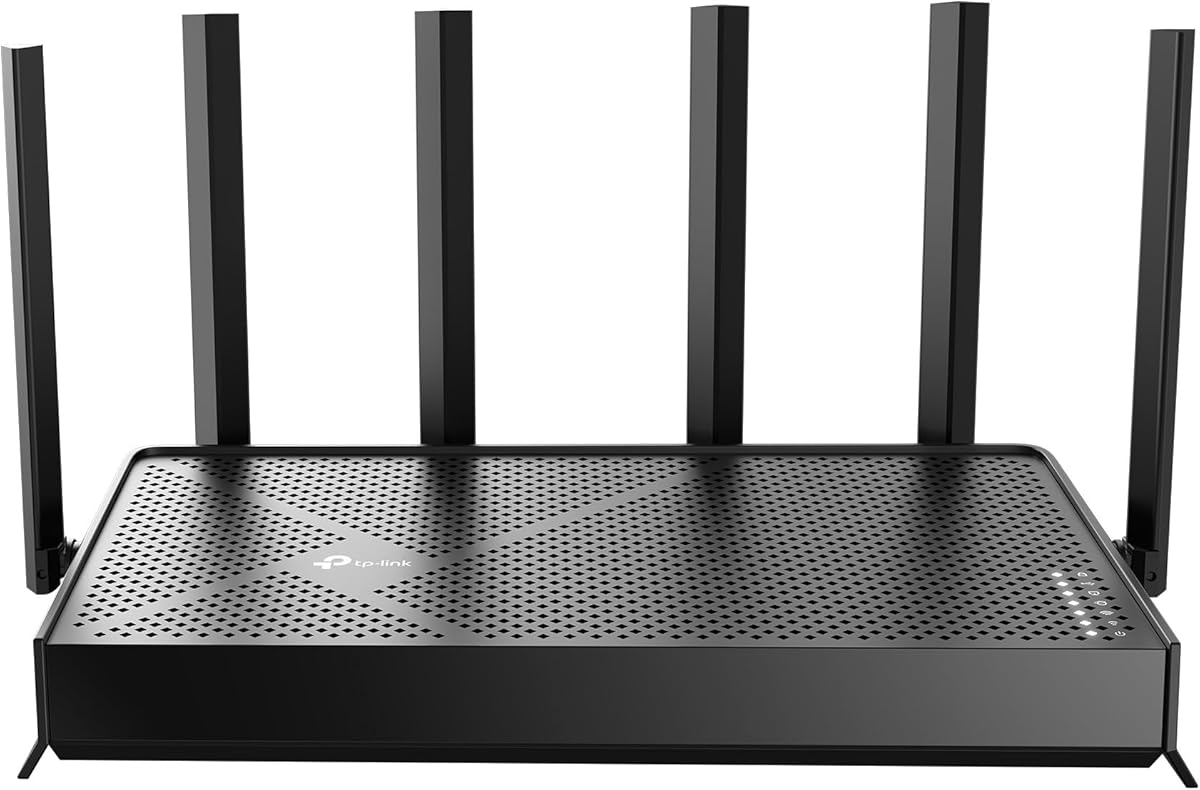
The TP-Link Archer BE600 is a tri-band Wi-Fi 7 router built around high-speed networking, including a 10-gigabit port and several 2.5-gigabit connections. Its 4.2 rating makes it a strong specialist choice for users with multi-gigabit internet, demanding wired devices, or an interest in TP-Link's HomeShield management platform.
We may earn a commission when you buy through this link, at no additional cost to you.
The router offers 5,765 Mbps on 6 GHz, 2,882 Mbps on 5 GHz, and 1,032 Mbps on 2.4 GHz. Multi-Link Operation, Multi-RUs, 4K-QAM, and support for channels up to 320 MHz target current Wi-Fi 7 devices. The advertised coverage reaches 2,600 square feet for as many as 120 devices, aided by six antennas and beamforming.
Its standout wired feature is one 10-gigabit WAN/LAN port alongside one 2.5-gigabit WAN/LAN port and three 2.5-gigabit LAN ports. A capable multi-gig modem can therefore feed the network without forcing all connected devices through slower links. VPN clients and a VPN server are supported, allowing connected devices to reach remote VPN servers without separate VPN software.
This advanced feature set is unnecessary for many households, and older clients will not benefit from the full Wi-Fi 7 potential. Some buyers may also prefer the greater customization of GL.iNet hardware. Nevertheless, the Archer BE600 is difficult to overlook for a home that can genuinely use ten-gigabit connectivity and a broad collection of fast wired clients.
The 10-gigabit port is the decisive feature for homes with a matching internet plan or ultra-fast local storage. Other machines can still benefit from the three dedicated 2.5-gigabit LAN ports without immediately needing ten-gigabit adapters.
Routing supported devices through a VPN client reduces the need to manage software on every television, console, or household device. Simultaneous VPN and regular internet support adds flexibility for devices that do not always need tunneled traffic.
We may earn a commission when you buy through this link, at no additional cost to you.
The TP-Link ER605 is a wired Gigabit VPN router that delivers strong network-security capabilities without wireless complexity. Its 4.4 rating reflects a reliable, business-oriented design for small offices, branch connections, and technically informed homes. It is a particularly good fit when every important device can be connected with Ethernet and separate access points are already available.
We may earn a commission when you buy through this link, at no additional cost to you.
It provides one Gigabit WAN port, two Gigabit WAN/LAN ports, and two Gigabit LAN ports. Up to three ports can operate as WAN connections, allowing bandwidth allocation among services. A USB port can accept a compatible 4G or 3G modem for backup WAN connectivity, adding resilience when the primary internet link is unavailable.
VPN capabilities are the central attraction. The router supports up to 20 LAN-to-LAN IPsec connections and 16 each of OpenVPN, L2TP, and PPTP. Security features include SPI firewall protection, VPN pass-through, DoS defense, IP, MAC, and URL filtering, a speed-test function, and management protections such as ping-of-death defense and local administration.
The obvious limitation is that it has no built-in Wi-Fi. Buying it for a typical home would require at least one router or access point, making a combined wireless solution more economical. Used as a dedicated VPN or secure gateway, however, the ER605 offers impressive protocol breadth, flexible WAN handling, and strong firewall functionality at a restrained price point.
The ER605 separates secure routing from wireless coverage. That makes it a sensible foundation for a small office with existing access points, or for a home where a dedicated VPN firewall can manage every wired and wireless client through a local connection.
Three configurable WAN ports allow different services or connections to be balanced across the router. The USB WAN backup option can add resilience through a compatible cellular modem when the primary link fails.
We may earn a commission when you buy through this link, at no additional cost to you.
The GL.iNet GL-AXT1800 Slate AX is a pocket-sized Wi-Fi 6 travel router with unusually capable VPN and customization features. Its 4.4 rating reflects a balanced design that works well for travelers who prioritize portability, private browsing, and easy sharing among several devices without carrying a full-size router.
We may earn a commission when you buy through this link, at no additional cost to you.
Combined Wi-Fi 6 throughput reaches 1800 Mbps, with 600 Mbps on 2.4 GHz and 1200 Mbps on 5 GHz. MU-MIMO, OFDMA, and BSS coloring help serve up to 120 devices while reducing interference. OpenVPN and WireGuard are pre-installed and compatible with more than 30 VPN providers, with advertised maximum speeds of 500 Mbps and 550 Mbps respectively.
OpenWrt 21.02 provides a customizable operating system and broad application support. A physical switch can enable or disable VPN or AdGuard Home after the selected function is configured. The router can also operate in repeater mode against public wired or wireless networks, including connections that use a captive portal, making it useful for creating a private local network in travel accommodations.
Its wired networking is more limited than that of the Beryl AX or Slate 7, and public hotspots may enforce time limits that require reconnecting the router. Those constraints matter for long trips or bandwidth-heavy work. For lighter travel use, however, the Slate AX offers an excellent combination of compactness, high device capacity, useful file sharing, and fast VPN support.
Connecting devices to the Slate AX creates a separate local network even when the router is linked to a public service. Using the router's VPN client can then encrypt traffic centrally, avoiding repeated VPN configuration on each personal device.
The USB feature supports SAMBA and WebDav file sharing when an external drive is attached. Combined with OpenWrt, it can become a compact travel NAS, downloader, or customized networking hub for technically capable users.
We may earn a commission when you buy through this link, at no additional cost to you.
The right router with VPN built depends on wireless generation, VPN protocol performance, hardware capacity, intended environment, and how much configuration complexity you are comfortable managing. These factors matter more than a headline speed number alone.
A VPN client sends the router's internet traffic through a remote VPN server, allowing connected devices to benefit from one centrally configured connection. A VPN server performs the opposite function, allowing authorized remote users to reach a home or office network. Some models support both roles, while others provide only one. GL.iNet's Flint 2, Beryl AX, and Slate 7 can handle client and server duties simultaneously, which is valuable when a user needs both protected internet access and remote access to local printers, servers, or other resources.
OpenVPN is widely supported and familiar, while WireGuard is designed for modern, efficient tunneling. The TP-Link ER605 adds IPsec, L2TP, and PPTP support for business-oriented environments, whereas the TP-Link AXE5400 supports OpenVPN, PPTP, and L2TP. Advertised VPN speeds can be impressive, but actual results depend on the internet service, provider, remote server, local network, encryption settings, and individual client requirements. The most useful comparison is therefore the maximum rate for the protocol you intend to use rather than the router's general wireless speed.
Wi-Fi 6E introduces the less crowded 6 GHz band, while Wi-Fi 7 adds features such as Multi-Link Operation, Multi-RUs, and 4K-QAM. Those advances are most valuable when phones, laptops, televisions, and other devices support them. A capable Wi-Fi 7 router can still serve older Wi-Fi 6 or Wi-Fi 5 clients, but those devices will not realize the newest benefits. The AXE5400 is a strong tri-band Wi-Fi 6E option, while the Flint 3, Flint 3e, Slate 7, and Archer BE600 represent different generations of Wi-Fi 7.
A router's wired ports influence network capacity even when most access happens wirelessly. Gigabit Ethernet is suitable for many internet plans, but multi-gigabit ports become important with fiber, fast NAS systems, modern workstations, and high-speed local transfers. The Flint 2 has two 2.5-gigabit ports, the Beryl AX adds a 2.5-gigabit WAN port, and the Flint 3 provides five 2.5-gigabit ports. The Archer BE600 goes further with one 10-gigabit port and several 2.5-gigabit options. A wired-only router such as the ER605 serves a different purpose and needs separate access points.
Coverage claims offer a starting point, but placement, walls, floor plans, antenna design, and client capabilities determine real results. The Flint 3e states coverage up to 2,500 square feet, and the Archer BE600 targets 2,600 square feet for up to 120 devices. For smaller but crowded networks, OFDMA, MU-MIMO, and BSS coloring may matter more than a large headline area. Larger homes may still need a mesh system or additional access points, and extending coverage can help if done with compatible hardware rather than through an unrelated proprietary system.
OpenWrt gives advanced users the ability to install plugins, add services, and customize network behavior. GL.iNet models are particularly attractive in this category: the Flint 2 includes 1 GB of memory and 8 GB of storage, the Flint 3 follows a similar high-capacity approach, and the Beryl AX, Slate AX, and Slate 7 are built on stated OpenWrt versions. TP-Link options provide polished consumer management, HomeShield tools, and easier configuration for users who want security features without extensive command-line work.
A travel router should be compact, easy to power, and capable of creating a private network over an unfamiliar connection. The Slate 7 adds a touchscreen for rapid status checks, while the Beryl AX includes a 2.5-gigabit WAN port for faster temporary uplinks. The pocket-sized Slate AX is easier to carry and supports repeater operation for public Wi-Fi. Check the available plug format for international travel, confirm how you will connect to the local network, and remember that some public hotspots impose session limits that can interrupt a router's connection.
Built-in VPN support protects selected traffic, but it is only one layer of a secure home network. WPA3, DNS encryption, firewall features, automatic security scans, IoT identification, and parental controls can provide additional visibility and control. AdGuard Home support appears across several GL.iNet models, while TP-Link HomeShield includes free network security and basic parental tools. Bark integration on the Flint 3 and Flint 3e adds content filtering and usage limits. Review the fine print before purchase, especially the cost and required account of any third-party service.
Begin by placing the router in a central, elevated position where it can communicate with intended clients without being obstructed by furniture, electronics, or thick walls. Connect it to the modem or source of internet service, power it on, and use the supplied quick-start information to reach the administration interface. For GL.iNet models, the manufacturer recommends updating the firmware during initial setup because the update can enhance performance and user experience. Users can also connect by Ethernet to reach the web administration panel when needed.
Create a unique administrative password, update the wireless security settings, and choose a strong Wi-Fi password before connecting many devices. If the router supports both VPN client and server functions, configure those roles separately and confirm that required ports or addressing do not conflict. Account for a third-party VPN service separately, since pre-installed OpenVPN or WireGuard software does not include a provider subscription. Test basic browsing, local device access, remote access, streaming, and gaming before changing the network more extensively.
For travel use, carry the appropriate plug, a compact Ethernet cable, and any compatible cellular modem required for backup connectivity. A physical VPN toggle on applicable GL.iNet routers should be configured before it is used, because its default function is intentionally inactive. For long-term care, keep firmware current, maintain ventilation around the chassis, periodically review connected devices, and update VPN credentials. If performance falls, check firmware, placement, nearby interference, server load, and the limits of the internet connection before changing hardware.
A router operating as a VPN client can route traffic from devices connected through it through the configured VPN tunnel. Coverage depends on the protocol, router performance, remote server, and individual application behavior. Some services or devices may bypass the tunnel, and local access to devices on the home network may behave differently from public internet traffic.
Most VPN clients require credentials from a compatible VPN service, and several products in this guide specifically mention an active subscription requirement. Pre-installed OpenVPN or WireGuard support means the router is ready to connect to a provider; it does not include the provider's service. Some router features, such as local DNS filtering, remain available without a separate VPN subscription.
No. It depends on how much control and customization you want. Managed consumer routers are generally easier for basic household use, while OpenWrt provides more extensive plugin support, configuration choices, and flexibility. Travelers and technically confident users may appreciate it, but it can add setup complexity and responsibility.
Usually, yes. Most models connect to a compatible broadband modem or gateway, though the required connection and addressing mode can vary. Some service providers use equipment that prevents a straightforward router connection, so checking the provider's requirements and the router's setup documentation is advisable before installation.
WireGuard is designed for efficient modern tunneling, while OpenVPN is broadly supported and familiar in business and consumer environments. IPsec is also common in enterprise setups. The best choice depends on your provider, remote server, network conditions, and required compatibility, so compare the router's supported protocols with the service you intend to use.
Not necessarily. The built-in VPN functions can be just as useful on a capable Wi-Fi 6 or Wi-Fi 6E router. Wi-Fi 7 becomes more attractive when you own several compatible clients, use a multi-gigabit internet plan, or want features such as Multi-Link Operation. Otherwise, a lower-generation router may provide a more practical balance of capability and cost.
Yes, but the effect on latency depends on the VPN server, provider, route, protocol, and local network. A nearby and well-maintained server can perform well, while a distant or congested server may increase delay. The Flint 2, Flint 3e, and Flint 3 are particularly relevant to gaming users because of their high advertised VPN throughput and low-latency wireless platforms.
Client mode sends the router's outbound traffic through a remote VPN server. Server mode accepts incoming tunneled connections so authorized remote users can access selected local network resources. A router supporting both can provide protected browsing and remote access at the same time, subject to its processing capacity and configuration.
The GL.iNet GL-MT6000 Flint 2 stands out as the most balanced overall selection, combining strong Wi-Fi 6 performance, fast OpenVPN and WireGuard support, two 2.5-gigabit ports, and generous hardware resources. The GL.iNet GL-BE9300 Flint 3 is the premium choice for buyers who want tri-band Wi-Fi 7, abundant multi-gigabit Ethernet, and advanced wireless features, while the TP-Link ER605 offers an economical path to robust VPN and firewall functionality in a wired environment.
Travelers should consider the Slate 7 for its exceptionally approachable touchscreen, the Beryl AX for a 2.5-gigabit uplink and simultaneous VPN roles, or the pocket-sized Slate AX for maximum portability. Home users seeking a familiar managed experience can look to the AXE5400 or AX3000, while the Archer BE600 suits households that can genuinely use a 10-gigabit backbone and multiple fast wired endpoints.
Before buying, verify current specifications, service-provider compatibility, VPN account requirements, security features, and port availability. Product details and prices change frequently, and no single router is ideal for every household. The most valuable choice is the one that combines the required VPN protocols, realistic wireless and wired capacity, and an administration experience you will be comfortable using.
